

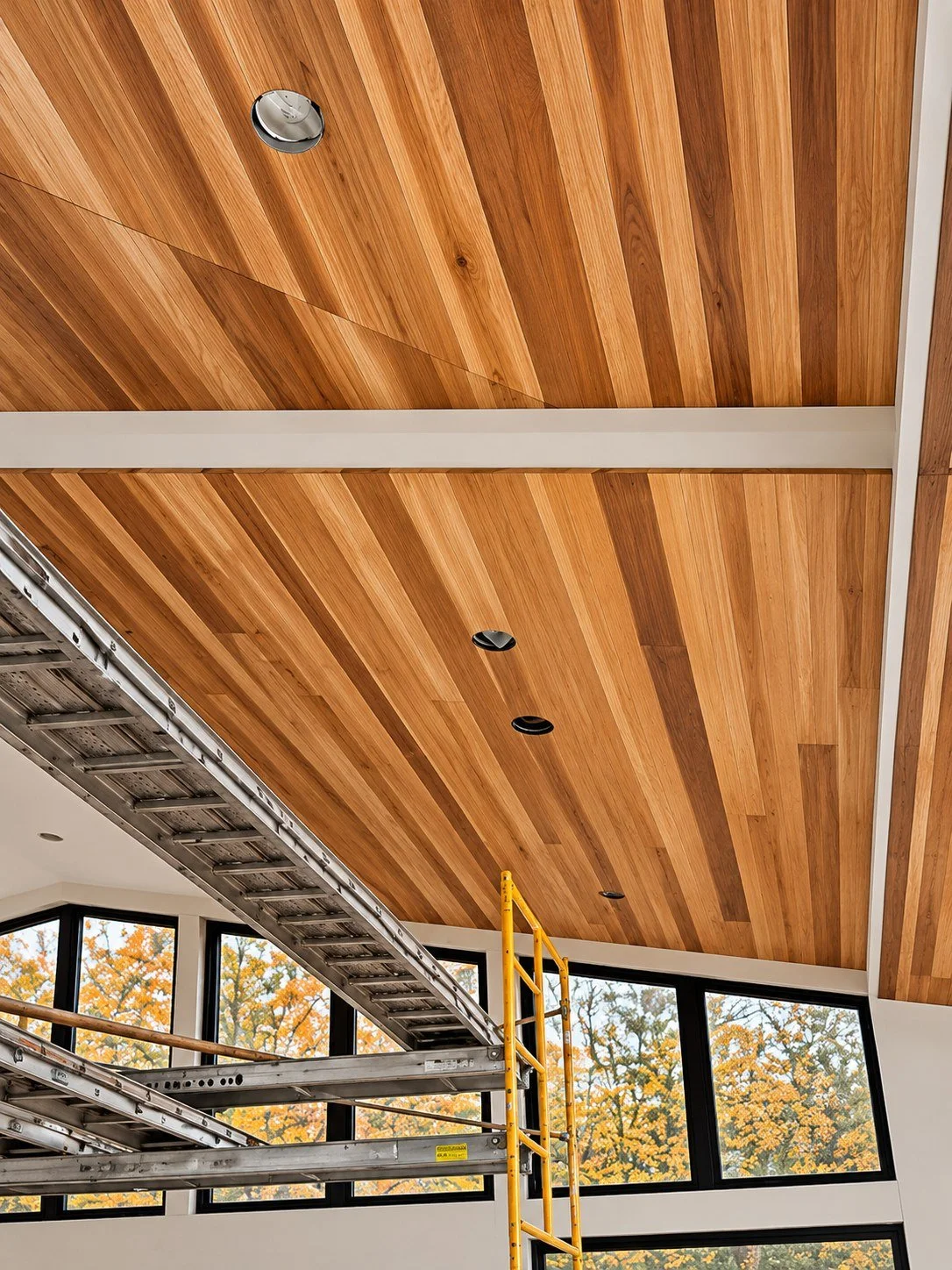
What Is a Vaulted Wood Ceiling?
A vaulted ceiling rises above the standard flat height, typically following the pitch of the roof. Common styles include cathedral ceilings, which mirror the roofline on both sides, and shed or sloped ceilings, which rise in a single direction.
A vaulted wood ceiling finishes that structure with wood planking or beams instead of painted drywall. Tongue-and-groove planks are the most common approach: each board interlocks with the next, creating a clean, continuous surface that follows the slope of the roof.
Exposed beams, whether structural or decorative, are often added to complete the look.
Why Homeowners Choose Wood for Vaulted Ceilings
Wood brings advantages that go beyond appearance.
Warmth and texture: natural grain softens large, open volumes that can otherwise feel stark
Design flexibility: wood can be stained, whitewashed, painted, or left natural to suit modern, rustic, or traditional interiors
Durability: properly finished wood ceilings hold up for decades with minimal maintenance
Acoustics: wood planking can soften echo in tall rooms compared with hard, flat surfaces
Value: a well-executed vaulted ceiling is a memorable feature that helps a home stand out
Popular Wood Options for Vaulted Ceilings
Cedar: Naturally Warm and Moisture Resistant
Cedar is a popular choice for vaulted ceilings because of its rich color, natural resistance to moisture and insects, and relatively light weight. It works especially well in Pacific Northwest homes, where it pairs naturally with fir trim, stone, and large windows.
2. Pine: Affordable and Versatile
Pine is one of the most budget-friendly options for tongue-and-groove ceilings. It takes stain and paint well, which makes it a flexible choice for homeowners who want a specific color tone. Knotty pine creates a rustic look, while clear grades suit cleaner, more contemporary spaces.
3. Douglas Fir: A Northwest Classic
Douglas fir offers a tight, attractive grain and excellent strength. It is a natural fit for homes across Bellevue and the Eastside, and it is commonly used for both planking and exposed beams in higher-end remodels.
4. Reclaimed Wood: Character With a Story
Reclaimed planks and beams bring aged texture, nail marks, and patina that new lumber cannot replicate. Because reclaimed material varies in size and condition, it typically requires more preparation and a higher budget.
Can You Vault an Existing Flat Ceiling?
In many homes, yes, but it depends on how the roof is framed.
Homes built with rafters often allow the flat ceiling joists to be raised or removed, as long as the structure continues to resist the outward force of the roof. That usually means keeping rafter ties in the lower portion of the roof slope or installing a properly engineered structural ridge beam.
Homes built with manufactured roof trusses are a different story. Trusses are engineered as complete units, and cutting or removing their bottom chords is generally not safe without a redesign by a structural engineer.
Either way, vaulting a ceiling is structural work. It requires a professional assessment, engineering where needed, and permits through the City of Bellevue or your local building department. This is not a project to attempt as a DIY weekend job.
Insulation, Ventilation, and Lighting
A vaulted ceiling changes how a roof assembly handles heat and moisture, so the details matter.
Insulation: with no attic space above the ceiling, insulation must fit between or above the rafters. Rigid foam, spray foam, or high-density batts are common solutions, and the right approach depends on your roof structure.
Ventilation: many vaulted roofs need a continuous air channel from eave to ridge to prevent moisture buildup. In the Pacific Northwest’s damp climate, getting this wrong can lead to condensation and rot inside the roof.
Lighting: vaulted ceilings pair well with recessed fixtures, pendant lights, and chandeliers hung at the right height. Planning lighting locations before the planks go up avoids visible wiring and awkward retrofits.
Skylights are another popular addition. A vaulted ceiling with skylights can fill a room with natural light, which is especially welcome during the darker months in the Seattle area.
How Much Does a Vaulted Wood Ceiling Cost in Bellevue, WA?
The cost depends on whether you are finishing an existing vaulted structure or creating one from a flat ceiling.
For wood planking alone, professional tongue-and-groove ceiling installation typically runs about $4 to $10 per square foot nationally, with premium wood species and complex layouts sometimes exceeding $15 per square foot. A large living room ceiling might fall between roughly $1,300 and $4,800 for the wood finish itself.
If the project involves vaulting a flat ceiling, costs rise significantly. Structural engineering, demolition, a possible ridge beam, new insulation, drywall or plaster work at the walls, and electrical changes all add to the budget. Every home is different, so a site visit and a project-specific estimate are the only reliable way to price the work.
Factors that affect the total include:
Roof framing type (rafters vs. trusses)
Room size and ceiling height
Wood species and finish
Whether beams, skylights, or new lighting are included
Insulation and ventilation requirements
Permit and engineering needs
Frequently Asked Questions About Vaulted Wood Ceilings
Do vaulted ceilings add value to a home?
They can. A vaulted wood ceiling is a distinctive architectural feature that buyers notice. The actual impact on value depends on the quality of the work, the style of the home, and the local market.
Are vaulted ceilings energy efficient?
They can be, but only when the roof assembly is properly insulated and ventilated. Because heat rises, a poorly insulated vaulted roof can increase heating costs. Good design prevents that.
Can any home have a vaulted ceiling?
Not every home is a good candidate. Rafter-framed roofs are usually the easiest to convert. Truss-framed roofs, low-pitch roofs, and certain layouts may require extensive structural changes or may not be practical at all. A contractor or structural engineer can confirm what your home allows.
How long does it take to install a wood ceiling?
Finishing an existing vaulted ceiling with tongue-and-groove planking can often be completed in days. Converting a flat ceiling into a vaulted one is a larger remodel that can take several weeks, depending on engineering, permits, and scope.
Do vaulted ceilings make a room harder to heat?
Tall rooms naturally stratify warm air near the peak. Ceiling fans, good insulation, and a properly sized heating system help keep the space comfortable year-round.
Start Your Ceiling Project with F&M Construction & Remodeling
A vaulted wood ceiling adds space, light, and warmth to a home, but the best results come from careful planning and skilled construction.
At F&M Construction & Remodeling, we help homeowners in Bellevue, Medina, Mercer Island, Kirkland, and surrounding Eastside communities plan and complete remodeling projects, from single-room upgrades to whole home renovations.
Whether you’re dreaming of a cedar cathedral ceiling in the living room or exposed beams in the kitchen, our team is ready to discuss your goals and provide a free, no-obligation estimate.