

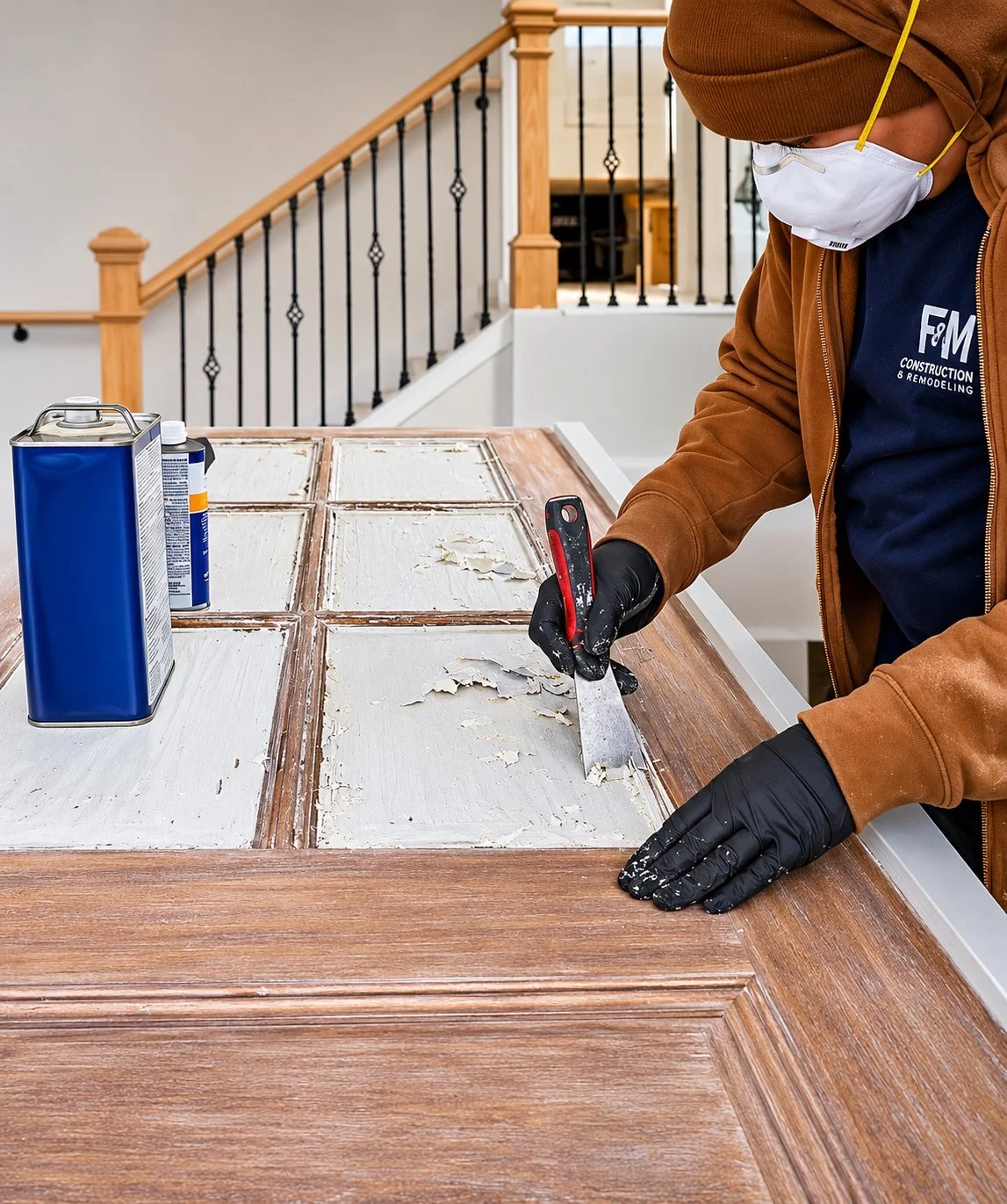
An exterior wood door adds warmth, character, and natural beauty to a home, but constant exposure to sunlight, rain, and changing temperatures can gradually damage its surface. Without the right protective finish, wood can fade, crack, swell, peel, or rot.
Choosing the right finish protects its appearance and extends its life. Whether it's a solid wood front door, a custom entry door, or a traditional wooden door, the right coating protects your investment.
For homeowners in Bellevue, Seattle, Mercer Island, Kirkland, and the surrounding Eastside, a weather-resistant finish matters even more, thanks to the Pacific Northwest's wet winters and summer sun.
What Is the Best Finish for an Exterior Wood Door?
The best finish depends on the look you want and how much exposure the door gets.
If you want to preserve the natural wood grain, a high-quality marine-grade spar varnish or exterior spar urethane with ultraviolet (UV) protection is usually the best choice. These finishes resist moisture and flex with the wood as temperatures and humidity change.
If the natural wood look isn't a priority, a high-quality exterior paint system generally gives better long-term protection against the sun.
The most common finishes for exterior wood doors are marine spar varnish, exterior spar urethane, exterior paint, and penetrating exterior wood stains.
1. Marine Spar Varnish: A Strong Choice for Weather Protection
Marine spar varnish is designed to protect wood exposed to moisture, sunlight, and changing weather. Although commonly associated with boats, it works well on exterior residential doors too.
Unlike many interior clear finishes, marine spar varnish is formulated to stay flexible as wood expands and contracts.
Benefits of marine spar varnish include:
Resistance to moisture and rain
UV inhibitors that slow sun-related deterioration
Flexibility through seasonal temperature swings
Enhancement of the natural wood grain
Availability in gloss and other sheens
Marine spar varnish suits natural wood entry doors where you want a rich, traditional appearance without covering the grain.
The tradeoff is upkeep. Clear varnishes need regular inspection and periodic recoating, and doors that take direct sun and driving rain need it more often than sheltered doors.
2. Exterior Spar Urethane: Protection With a Natural Appearance
Exterior spar urethane is another popular finish for wooden front doors. It forms a protective coating that limits moisture penetration and adds some UV resistance, and many products include UV blockers to slow fading and finish breakdown.
Depending on the product, spar urethane comes in gloss, semi-gloss, and satin. Gloss is reflective and highlights the grain; satin is more understated.
For a relatively straightforward finishing system, spar urethane is a practical option.
Just make sure the product is labeled for exterior use. Standard interior polyurethane won't hold up on a door exposed to sun and rain because it isn't formulated for prolonged outdoor weathering.
3. Exterior Paint: Best for Long-Term UV Protection
If you prefer a painted door, a premium exterior paint system is often the most durable choice against sunlight.
Unlike transparent finishes, exterior paint contains pigments that block much of the sunlight before it reaches the wood. Paired with the right exterior primer, paint also guards against moisture.
A properly prepared and painted exterior door can hold up for years, though longevity depends on the product, the prep work, exposure, and maintenance. High-quality exterior acrylic latex paint is a common choice for its flexibility, color retention, and weather resistance.
Before painting, check the door manufacturer's recommendations. Some wood and insulated door manufacturers restrict certain dark paint colors because excessive heat absorption can contribute to warping or other damage.
Paint is the better fit for doors that take significant sun, or for anyone who prefers a solid color over visible grain.
4. Exterior Wood Stain: A Natural, Low-Build Alternative
Exterior wood stains enhance the appearance of wood while providing varying levels of moisture and sun protection.
Unlike film-forming varnishes, many penetrating stains soak into the wood instead of building a thick coating on the surface. That can make maintenance easier: some penetrating stains can be refreshed without extensive stripping, as long as the surface is properly prepared.
Not all exterior stains protect equally. Transparent stains generally provide less UV protection than semi-transparent or more heavily pigmented products. The more pigment a stain contains, the better it shields the wood from sunlight.
If you want a natural or rustic look, a penetrating stain is a good fit, but expect regular maintenance. Always confirm the stain is rated for exterior doors and for your wood species.
How Does Sunlight Damage an Exterior Wood Door?
Sunlight damages exterior wood doors through ultraviolet radiation and heat.
Over time, UV exposure breaks down components of the wood surface and degrades protective coatings, causing discoloration, fading, and finish failure. Heat adds repeated expansion and contraction as temperatures rise and fall.
South- and west-facing doors often get heavy afternoon sun, which can speed up finish deterioration.
To limit sun damage, choose finishes with UV-resistant properties, keep the coating maintained, and consider a covered entryway. Even UV-resistant clear finishes don't last forever; they gradually break down and need maintenance.
How Does Rain Affect Exterior Wood Doors?
Rain damages a wood door when water gets into unfinished surfaces, joints, cracks, or worn coatings.
Wood expands as it absorbs moisture and contracts as it dries. Repeated cycles can cause cracking, warping, joint movement, and finish failure. Persistent moisture also creates conditions that encourage wood decay.
The bottom of the door is especially vulnerable because water collects around thresholds, exposed end grain, and poorly sealed joints. In the Seattle area, where long rainy stretches are common, protecting these spots is a core part of door maintenance.
A finish works best alongside properly functioning weatherstripping, thresholds, flashing, and drainage.
How to Apply a Protective Finish to an Exterior Wood Door
Good surface preparation matters as much as the product you choose.
Step 1: Inspect the Door
Before applying a new finish, check the door for peeling coatings, cracks, soft wood, discoloration, and moisture damage. Repair any underlying issues before refinishing.
Step 2: Remove Loose or Failing Finish
Sand or strip away deteriorated coatings. If the existing finish is in good shape, complete removal may not be necessary, but confirm the new product is compatible. Never apply a new finish over loose or peeling material.
Step 3: Sand the Wood
Sand according to the finish manufacturer's instructions. The goal is a smooth, clean surface the coating can grip. Remove all dust before moving on.
Step 4: Allow the Wood to Dry
The wood should be fully dry before staining, painting, or varnishing. Finishing over damp wood traps moisture and leads to peeling, blistering, and early coating failure. Follow the product's moisture and application requirements.
Step 5: Apply the Protective Finish
Use a quality brush or the applicator the manufacturer recommends. Apply thin, even coats, working with the grain where appropriate. Coat counts vary by product, and many clear varnish systems need several coats to build enough protection. Respect the specified drying times and sanding between coats.
Step 6: Protect the Edges and Exposed Wood
Pay attention to the top, bottom, sides, and other exposed wood surfaces. These spots are easy to miss but let moisture into the door. Follow the door manufacturer's requirements when sealing edges, especially around hardware and weather seals.
Step 7: Inspect and Maintain the Finish
Inspect the door at least once a year, especially after severe weather. Look for fading, peeling, cracks, water stains, or worn spots. Catching problems early prevents a full refinish and costly wood repairs.
How Often Should You Refinish an Exterior Wood Door?
There's no universal refinishing schedule. The interval depends on the finish type, wood species, exposure to rain and sun, application quality, and whether the entry is covered.
A door under a deep porch overhang can hold its finish far longer than a west-facing door in direct afternoon sun and driving rain. Clear coatings generally need more frequent maintenance than a good paint system.
Rather than counting years, inspect the finish regularly and deal with wear before moisture reaches the wood.
Should You Use Oil-Based or Water-Based Finish on an Exterior Door?
Both oil-based and water-based exterior finishes protect well when formulated for outdoor use.
Oil-based spar varnishes give a warm, amber tone that brings out the richness of natural wood. Water-based clear finishes often dry faster and offer different color characteristics, depending on the formulation.
Not every water-based polyurethane is rated for outdoor use. What matters most is that the specific product is designed for exterior doors and carries the right moisture and UV resistance. Check compatibility with any existing stains, sealers, and coatings too.
What Is the Best Finish for Exterior Wood Doors in Seattle and Bellevue?
For homes in Seattle, Bellevue, Kirkland, Redmond, Mercer Island, and the rest of the Eastside, the finish has to handle seasonal rain, moisture, and summer sun.
A marine-grade spar varnish or exterior spar urethane is a strong option when you want to keep the grain visible. For doors that take prolonged direct sun, an exterior paint system typically gives stronger UV protection.
Homes with uncovered entries may also benefit from better drainage, weatherstripping, and overhead protection. Even the best finish can't compensate for water that keeps getting in through unsealed joints or pooling at the bottom of the door.
Common Mistakes to Avoid When Finishing an Exterior Wood Door
A few common mistakes can shorten the life of an exterior door finish.
Using interior polyurethane: interior formulas lack the weather resistance exterior exposure demands.
Skipping surface prep: dirt, loose coatings, and deteriorated wood prevent proper adhesion.
Finishing damp wood: trapped moisture causes premature coating failure.
Ignoring the top and bottom edges: unprotected edges become entry points for moisture.
Applying too few coats: clear coatings need the film thickness their manufacturers specify.
Neglecting maintenance: letting a finish fail completely turns simple upkeep into a major refinishing or repair job.
Avoiding these mistakes preserves both the coating and the wood underneath.
When Should You Replace Instead of Refinish a Wood Door?
Not every door can be saved by refinishing. Extensive rot, severe warping, compromised joints, or significant structural deterioration may call for repair or replacement.
Minor surface discoloration, worn varnish, and localized finish damage are usually fixable with refinishing. Deeper moisture problems should be evaluated before you invest in a new coating.
Replacing a badly damaged door can cost less in the long run than repeatedly repairing a failing structure.
Protecting Your Exterior Wood Door for Years to Come
An exterior wood door is both an architectural feature and a functional part of a home's building envelope. Protecting it from rain and sunlight requires the right finish, careful preparation, proper application, and ongoing maintenance.
For natural wood doors, marine spar varnish and exterior spar urethane offer a combination of weather resistance and visual appeal. For homeowners seeking maximum protection against sunlight without preserving the wood grain, a high-quality exterior paint system is often the better option.
At F&M Construction & Remodeling, we understand the importance of selecting materials and finishes that complement a home's design while standing up to the Pacific Northwest climate. Whether you're updating an entryway, planning an exterior renovation, or considering a larger home remodeling project, thoughtful material selection can make a lasting difference in appearance and performance.